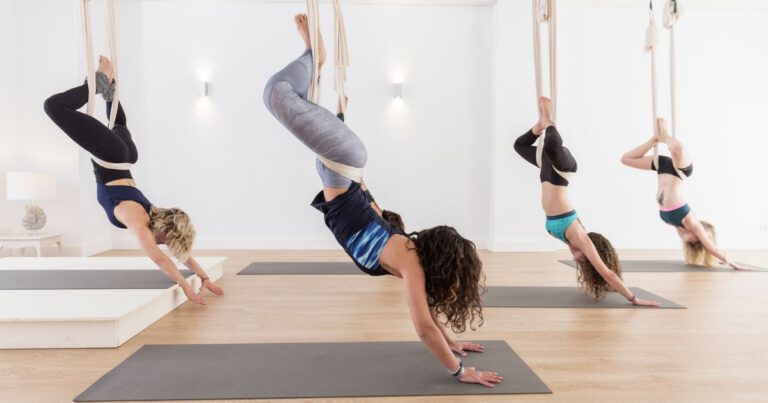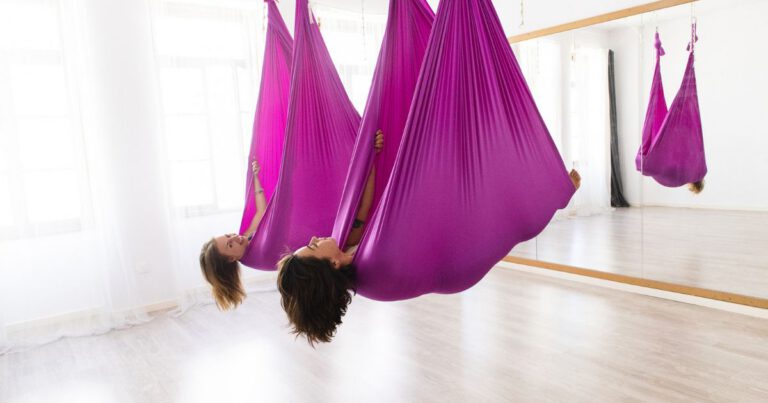
Put a child near an aerial hammock and they’ll want to climb into it within seconds. That’s the best thing about aerial yoga for kids: you don’t have to sell it to them. The fabric swings, it holds them up, and it turns ordinary stretches into something that feels like flying.
I’ve practiced aerial yoga since 2008 and have taught it as a qualified yoga teacher for years, so I know how much fun a hammock is. I also know what can go wrong when the rigging is rushed or nobody is watching. This guide covers both sides: what kids actually get out of it, what age to start, how to set up a hammock safely at home, and six easy poses and games to try together.
Is aerial yoga good for kids?
Yes. For most healthy children, aerial yoga is a fun way to get active and build strength, balance and confidence. The rules are simple: an adult always supervises, the hammock is rigged properly and hung low, there’s a mat underneath, inversions wait for a teacher, and the fabric never stays up unattended, where a child could get tangled in it.1
What is aerial yoga for kids?
Aerial yoga uses a soft fabric hammock, hung from the ceiling or a frame, to support your body in yoga poses. Kids’ aerial yoga is the same idea, made playful. Instead of holding a pose for five slow breaths, children become superheroes, bats, butterflies and caterpillars in a cocoon, often with a story or a game tying the class together.
The hammock is usually hung lower than in an adult class, so little feet can reach the floor, and the focus is on swinging, balancing, climbing in and out and resting in the fabric rather than on advanced tricks. If aerial yoga is new to you too, our beginner’s guide to aerial yoga explains the basics.
What are the benefits of aerial yoga for kids?
I’ll be honest: I couldn’t find a single study of aerial yoga in children. What we do have is good evidence on why kids need to move, and some early research on yoga for children in general.
It’s a fun way to hit their activity target
The CDC recommends that children and teens aged 6 to 17 get 60 minutes or more of moderate-to-vigorous activity every day. That includes muscle-strengthening activities, like climbing or push-ups, on at least three days a week. Children aged 3 to 5 should be active throughout the day.2 Climbing into a hammock, pulling up on the fabric and holding a pose with their arms is exactly that kind of strength work, and most kids don’t notice they’re exercising.
It builds strength, grip and balance
There’s a lot of holding on in aerial yoga. Children grip the fabric, use their arms to pull themselves up, and use their core to stay steady while the hammock moves. Balancing on one leg while holding a swaying hammock is harder than it looks, and kids get visibly better at it from week to week.
It may help them feel calmer
Research on yoga for children is still young. One review found that yoga reduced anxiety or depression in 70% of studies in children and teens, but the studies were fairly weak and the results can’t be called conclusive. A review of school yoga programs found promising results for children’s mental health.3 Those studies were of mat yoga, not aerial yoga. Still, the quiet part of a kids’ aerial class, lying in the hammock like a cocoon and breathing slowly, is often the bit children ask for again.
It’s confidence-building
Kids love showing you something they couldn’t do last week. Hanging in a “flying” pose for the first time, or balancing without a wobble, gives them a clear, visible win. That kind of success can make an anxious or less sporty child much keener to move.
What age can kids start aerial yoga?
There’s no official minimum age. Studios set their own, and in the class listings I checked they started anywhere from age 3, usually as a parent-and-child class, up to age 8 for more technical classes.
As a rough guide:
- Ages 3 to 5: short, playful sessions with a parent right beside them. Low hammock, seated swings, cocoons and simple balances only.
- Ages 6 to 9: most children can follow simple instructions in a kids’ class and hold basic poses on their own, with an adult watching.
- Ages 10 and up: ready for longer sessions and more skills. Inversions are best learned with a teacher who can spot them.
Age matters less than whether your child can listen to “stop” and “come down” the first time you say it. If they can’t yet, keep the hammock for short, hands-on sessions together.
Is aerial yoga safe for kids?
With good rigging and an adult watching, it’s a gentle activity. As with any exercise, injuries can happen. In yoga, the most common ones are sprains and strains, and serious injuries are rare.3 With a hammock, the extra risks are falls, a hammock that isn’t hung safely, and getting tangled in the fabric. Our full guide to whether aerial yoga is safe covers the adult side.
The fabric is the hazard people forget
Stretchy fabric can form loops, and loops can trap a child’s head or neck. In February 2026, the US Consumer Product Safety Commission (CPSC) recalled a children’s cocoon-style sensory swing for exactly this reason: its flexible fabric could form loops that entangle a child’s head or neck.1 It isn’t a new problem. Back in 1995, the CPSC reported that 17 children aged 5 to 17 had strangled in mini hammocks without spreader bars, and warned that children can become entangled while getting in or out.4
So these rules aren’t optional:
- An adult is in the room, watching, the whole time a child is in the hammock.
- Never wrap the fabric around a child’s neck, and keep their face uncovered in a cocoon.
- One child per hammock.
- When you’re done, take the hammock down, or knot it up well out of reach. Carabiners make this a 10-second job.
Keep inversions for later
Kids are naturally drawn to hanging upside down, and that’s the part I’d leave to a teacher. Head-down positions raise the pressure inside your eyes, as a study of adults doing yoga poses showed.5 If your child has glaucoma or another eye condition, high or low blood pressure or a heart condition, check with their doctor before they go upside down.6 When they do learn inversions, keep them short, and have them come up slowly if they feel dizzy or get a headache.
How to set up an aerial hammock for kids at home
A hammock at home is lovely for kids, but a child bouncing and swinging puts more force on your rigging than an adult sitting still. Treat the set-up exactly as you would for an adult.
- Rig it properly. Hang the hammock from a properly installed ceiling mount, a joist or beam, or a freestanding frame made for aerial yoga. Our guides to aerial rigging and installing a hammock at home walk through it, and our guide to aerial yoga weight limits explains why moving loads matter.
- Hang it low. When your child sits in the hammock, their feet should touch the floor. Most hammocks come with daisy chains so you can raise it as they grow.
- Put a mat underneath. A thick mat or a folding crash mat under the hammock softens the slips that will happen.
- Clear the space. Leave room all around the hammock for swinging, away from furniture, radiators, windows and walls.
- Use a real aerial yoga hammock. A low-stretch nylon hammock made for aerial yoga, rigged from two points, is a different thing from a cheap stretchy “sensory swing”. Whatever you buy, search the CPSC recalls list for it first.
A doorway swing can work for gentle seated play, but follow the maker’s limits for the bar and the door frame. Our guide to using a yoga swing in a door frame explains how. For the full kit list, see our aerial yoga equipment guide.
If you’re buying a hammock that the whole family will use, this kit from one of our affiliate stores comes with everything except the ceiling mount or frame:
Best for: A family hammock for home aerial yoga
Uplift Active Hammock (Low Stretch) Set
Low-stretch 40 denier nylon tricot, rated for users up to 400 lb, with steel locking carabiners and adjustable daisy chains in the box, so you can raise the hammock as your child grows.
- Rated for users up to 400 lb (181 kg)
- Daisy chains let you set a low height for kids
- Five lengths, sized to your ceiling
- Each daisy chain has a 190 lb safe load, so rig from two points
- Ceiling mounts or a frame sold separately
- Uplift says a professional should install the rigging
Read our full Uplift Active hammock review, or compare it with other options in our list of the best aerial yoga hammocks and swings.
What should kids wear for aerial yoga?
Comfortable leggings and a fitted T-shirt that covers the armpits and the backs of the knees, because bare skin rubbing on fabric can burn. Bare feet are best for grip. Take off jewelry, hair clips and anything with zips or buttons, which can snag the fabric, and tie long hair back. Our guides to aerial yoga clothing and avoiding friction burns have more tips.
6 easy aerial yoga poses for kids
These all keep children the right way up, with the hammock low and at least one hand or foot on the floor or fabric. Do them together, and let your child name the poses. They’ll remember them better that way.
1. The swing
Spread the fabric wide, like a seat. Your child sits in it with their bottom fully supported, holds the fabric on each side, keeps their feet on the floor and walks backward a little before lifting their feet for a gentle swing. It’s the perfect first pose, because it shows them the hammock will hold them.
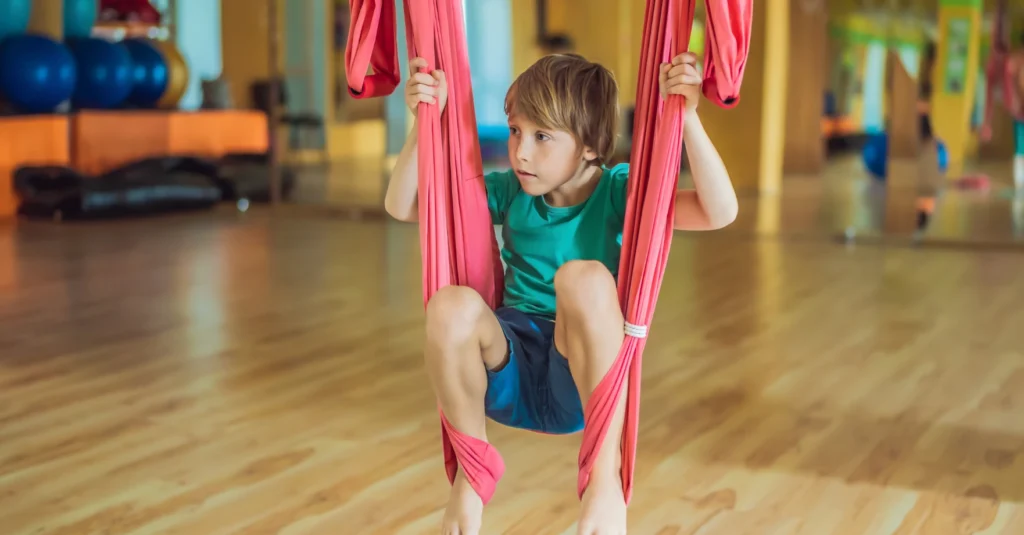
Watch for: fabric bunched into a narrow strip under them. Spread it out so it’s comfortable and secure.
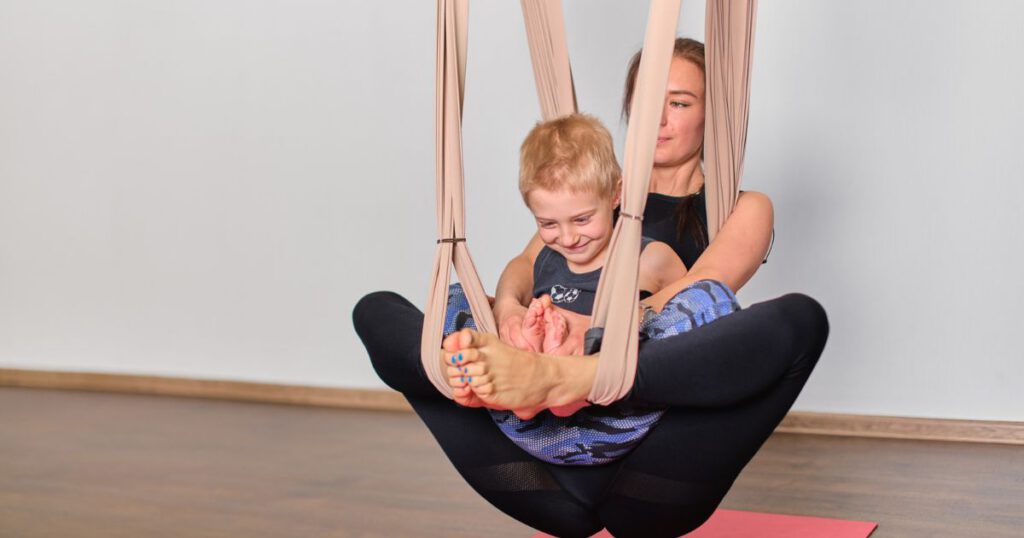
2. The butterfly
From the swing, your child brings the soles of their feet together and lets their knees fall open, holding the fabric with both hands. They can flap their “wings” by gently moving their knees up and down. It’s a gentle hip stretch disguised as a game.
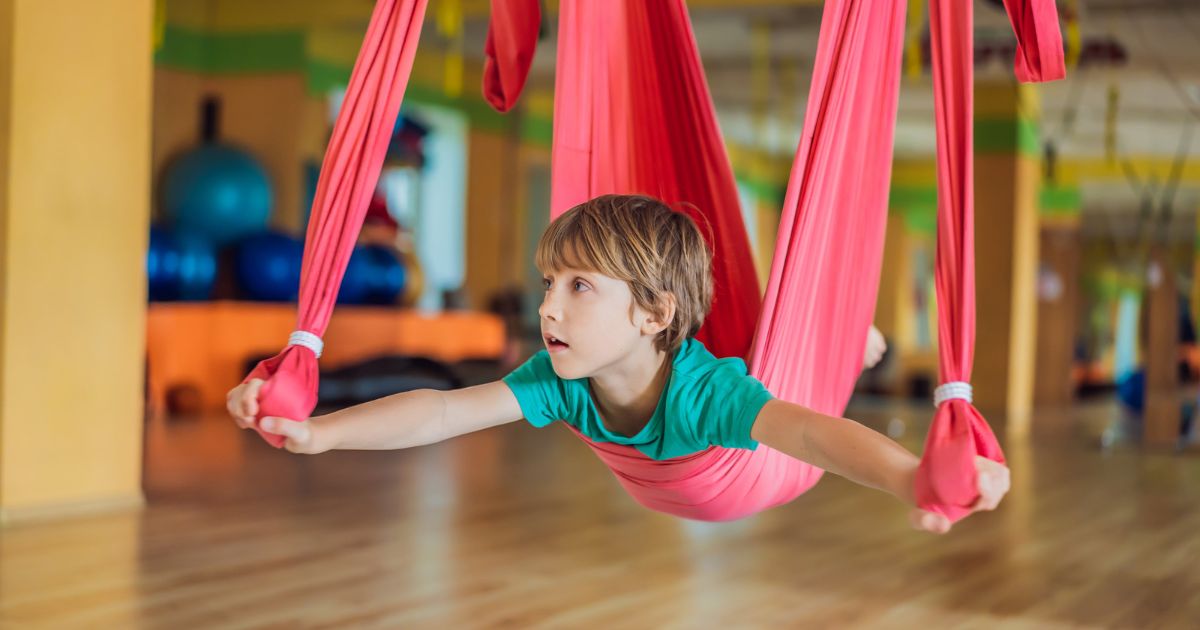
3. The superhero
This is the one in the photo at the top of this page, and the one kids ask for most. Lower the hammock to about hip height. Your child stands facing it, with the fabric across the front of their hips, holds the fabric on each side, and leans forward while walking their feet back until they lift off the floor. Then they let go with one hand at a time and fly with their arms out.
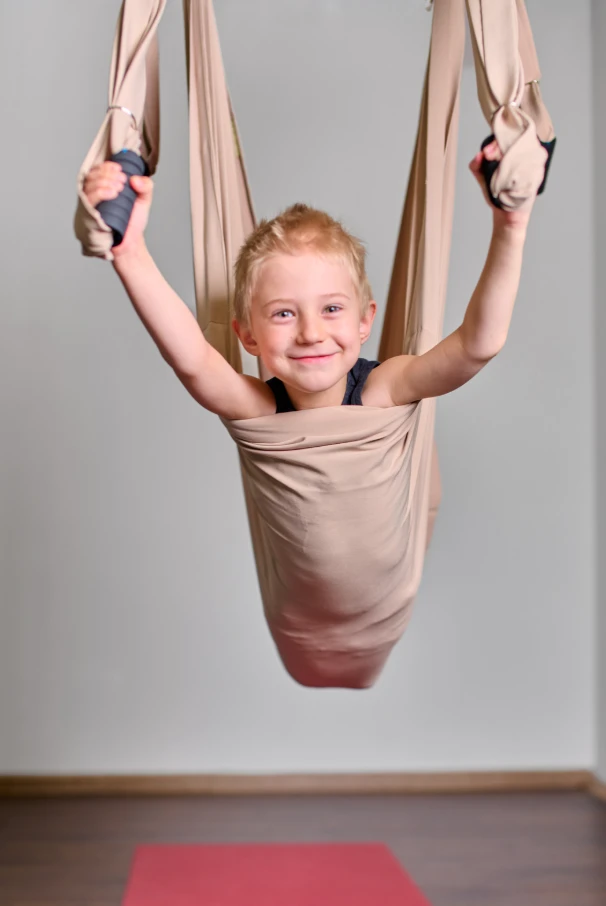
Watch for: the fabric sitting on their stomach instead of the front of the hips, which is uncomfortable. Keep the hammock low enough that their hands can reach the floor.
4. The flamingo
Your child stands next to the hammock, holding the fabric with one hand, and lifts the opposite knee. Can they let go and balance for five seconds? Ten? Then swap sides. The swaying fabric makes it harder than a balance on the mat, and they’ll feel their ankles and core working.
5. The archer
Standing with their back to the hammock, your child places the top of one foot in the fabric behind them, about knee height, and bends their standing leg into a small lunge, holding a chair or your hand for balance if they need to. It’s a lovely stretch for the front of the hip. For more ideas, see our aerial yoga stretching routine, which you can do side by side.
6. The cocoon
End every session here. Your child sits in the open hammock, lies back and lets you wrap the sides of the fabric loosely around them, keeping their face and neck clear. Then the hammock rocks gently while they take five slow “balloon breaths”, in through the nose to fill the balloon, and out through the mouth to let it go. Stay right beside them, and unwrap them after a minute or two.
When they’re ready for more, our guides to essential aerial yoga poses and yoga swing poses for beginners have poses for older children to work toward with you or a teacher.
Games that make aerial yoga fun for kids
Children stay interested when there’s a game. A few that work well:
- Freeze swing: play music, swing gently, and when the music stops, everyone freezes in a pose.
- Animal adventure: tell a story where your child has to become each animal they meet, like a butterfly, a flamingo or a bat (a bat on the floor, upside-down hammock work comes later).
- Copy me: take turns choosing a pose for the other person to copy. Kids love being the teacher.
- Count the breaths: in the cocoon, see who can take the slowest breath. It’s a sneaky way to calm everyone down before bedtime.
Keep sessions short, about 15 to 20 minutes for younger children, and stop while they’re still enjoying it.
How to choose a kids’ aerial yoga class
A class with a good teacher is the best way for children to learn aerial yoga, especially once they want to try inversions. Look for:
- A teacher with aerial training and experience teaching children, who’s happy to tell you about both
- Classes grouped by age, with one child per hammock
- Hammocks hung low, with a mat under each one
- A small class size, so the teacher can reach every child quickly
- Parent-and-child sessions for younger children
Ask how the studio checks its rigging and whether inversions are taught in kids’ classes. A good studio will be glad you asked.
Questions parents ask about aerial yoga for kids
Can kids use an adult aerial yoga hammock?
Yes. Kids’ classes usually use the same hammocks as adult classes, hung lower. An adult hammock that’s rated well above your child’s weight is ideal, as long as the rigging holding it is just as sound. Lower it with the daisy chains so your child’s feet reach the floor when they sit.
Can I do aerial yoga with my child?
Yes, and it’s a lovely way to practice together. Taking turns is simplest, because it frees you up to spot your child. You can share the hammock for gentle seated poses like the butterfly, as long as the hammock and every piece of rigging are rated well above your combined weight and the hammock hangs low. Parent-and-child classes are a good place to start.
How often should kids do aerial yoga?
As often as they enjoy it. Once or twice a week, as a class or at home, is plenty. It counts toward the hour of daily activity the CDC recommends for children 6 and over, but it shouldn’t replace running, jumping and playing outdoors.2
Is aerial yoga good for kids with ADHD or autism?
Many children with ADHD or autism love the movement and the snug feel of the hammock, but there’s no research on aerial yoga for these children. Reviews suggest school yoga programs may have benefits for neurodiverse children,3 so it may be worth a try. If your child has sensory needs, ask their occupational therapist whether a hammock suits them, and how to use it.
Should kids go upside down in aerial yoga?
Not at home to begin with. Let a teacher introduce inversions once your child is confident in the hammock, and keep them short. If your child has an eye, heart or blood pressure condition, ask their doctor first.6
Sources
- US Consumer Product Safety Commission (CPSC), “TheKiddoSpace Recalls Children’s Sensory Swing Due to Risk of Serious Injury or Death from Strangulation”, February 2026. ↩︎
- Centers for Disease Control and Prevention (CDC), “Child Activity: An Overview”, 2025. ↩︎
- National Center for Complementary and Integrative Health (NCCIH), “Yoga: Effectiveness and Safety”. This covers yoga in general, not aerial yoga. ↩︎
- US Consumer Product Safety Commission (CPSC), “CPSC, Consolidated Stores Announce Mini-Hammock Recall”, December 1995. ↩︎
- Jasien JV, et al., “Intraocular Pressure Rise in Subjects with and without Glaucoma during Four Common Yoga Positions”, PLoS One, 2015. ↩︎
- Cleveland Clinic, “Inversion Tables Might Flip the Script on Back Pain”, 2025. ↩︎
Get Aerial Yoga Tips Sent Directly to Your Inbox
Join our mailing list to be the first to know about the latest aerial yoga news and products. We only include the best content in our newsletter, which includes marketing material. Read our Privacy Policy